
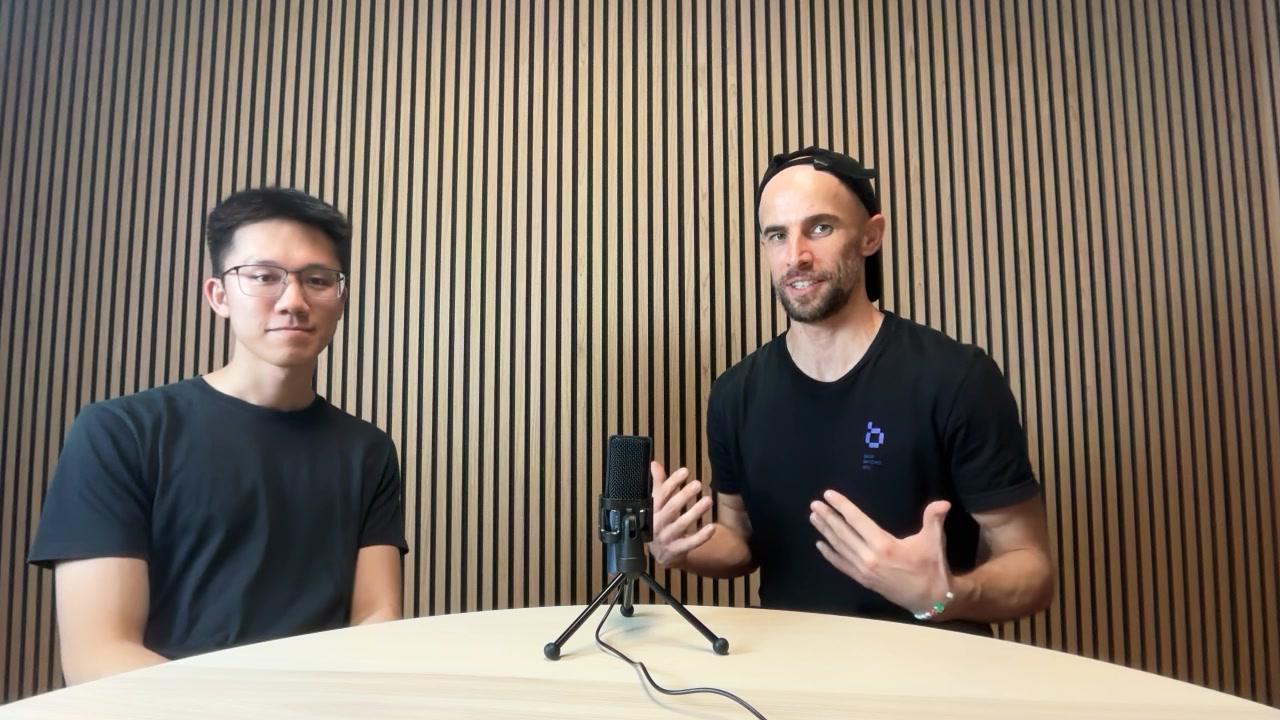
I met Chong Ing Kai an hour after we'd both spent a Saturday at a robot hackathon at Network School, a room of maybe forty kids and adults building machines out of what look like chopsticks. He's 22, the founder and CEO of Stick 'Em, and one of the more clear-headed builders I've talked to in a while. So I asked him to tell me the whole story.
A maker who never stopped
Kai has been taking things apart and putting them back together since he was six or seven. For a few years that meant building dangerous things, flamethrowers, air cannons, tasers, “things that harm people,” as he put it cheerfully. The turn came in primary five, when his dad introduced him to Engineering Good, a Singapore nonprofit that pairs makers with people with disabilities. Building a button that lets someone who can't turn a lock open their own door taught him how powerful technology is when it's aimed at a real problem. He stopped building dangerous things and started teaching kids to build useful ones.
Why STEAM, and why it's broken
Stick 'Em exists to make STEAM education accessible. The “A” (arts) is the part people misunderstand. Kai's point is that Da Vinci was an inventor as much as a painter, and without that inventive, human streak “people would just build boring computers and very boring things.”
But the deeper problem he saw as a robotics teacher was exclusion. “When I looked at my classroom, everybody was a rich kid. 99% of them had the money.” Every other school he visited, the kids were bored, because they weren't building anything, they were copying a robot off a screen. “The whole approach to STEM education was so broken, so inaccessible, so exclusive. So what if I can build something to solve it?”
His answer is deliberately cheap and open-ended: chopstick-based robotics kits, ready-to-use lesson materials, and teacher training that takes three hours and works whether the teacher logs in from Uganda or shows up to a workshop in person. Some schools use it for robotics; others for English, math, or physics. “Ultimately, Stick 'Em is just a tool for hands-on learning.”
Problem clarity beats vibe-coding
I asked how a maker becomes a founder. His answer was about problem clarity. “Y Combinator always said, build something people want. It's deceptively simple, the real question is how many people want it.” Today's tools make it trivially easy to build things, he argues, which is exactly why so many entrepreneurs build things no one needs. Stick 'Em has run six years without a meaningful pivot, and he credits that entirely to having spent enough time inside a problem to actually understand it.
Ten customers is easy, I can WhatsApp every one. Getting to the next thousand, the next ten thousand, is a completely different problem.
Getting started was almost accidental. He built in public, the first 3D print of a Stick 'Em part was posted with a one-word, frustrated caption, and a teacher who followed him from his robotics days asked, “What is this? Tell me more.” That became the first customer, then a second, a third. Today Stick 'Em reaches roughly 35,000 students and 3,500 teachers across 300–400 schools in 18 countries, with the most active markets clustered in Southeast Asia. The external validation has piled up too: Forbes 30 Under 30 at 21, Tatler, and a US$1M Hult Prize for social entrepreneurship, won against roughly 15,000 competing teams.
Don't guide the kids
His teaching philosophy is almost anti-instruction. “At the core of it, it's really to not guide the kids.” Give them a general problem statement, step back, and let them create, which is why nothing in that hackathon room looked the same. Problem-solving, he believes, doesn't come from sitting in front of a screen pressing buttons; it comes from touching and building things, immersed for four hours instead of scrolling TikTok.
That belief extends to AI. Counterintuitively for a founder who's “back coding nowadays,” Kai would delay giving kids the tools. “Creativity is like an instinct, an innate skill. If you don't sharpen it, if you chop it off and let the computer do it, you're cooked.” Hand a kid a challenge and they throw it straight to ChatGPT; the packaged, perfect solution is, he thinks, exactly the wrong way to educate.
Two risks: almost jail, and the President of Singapore
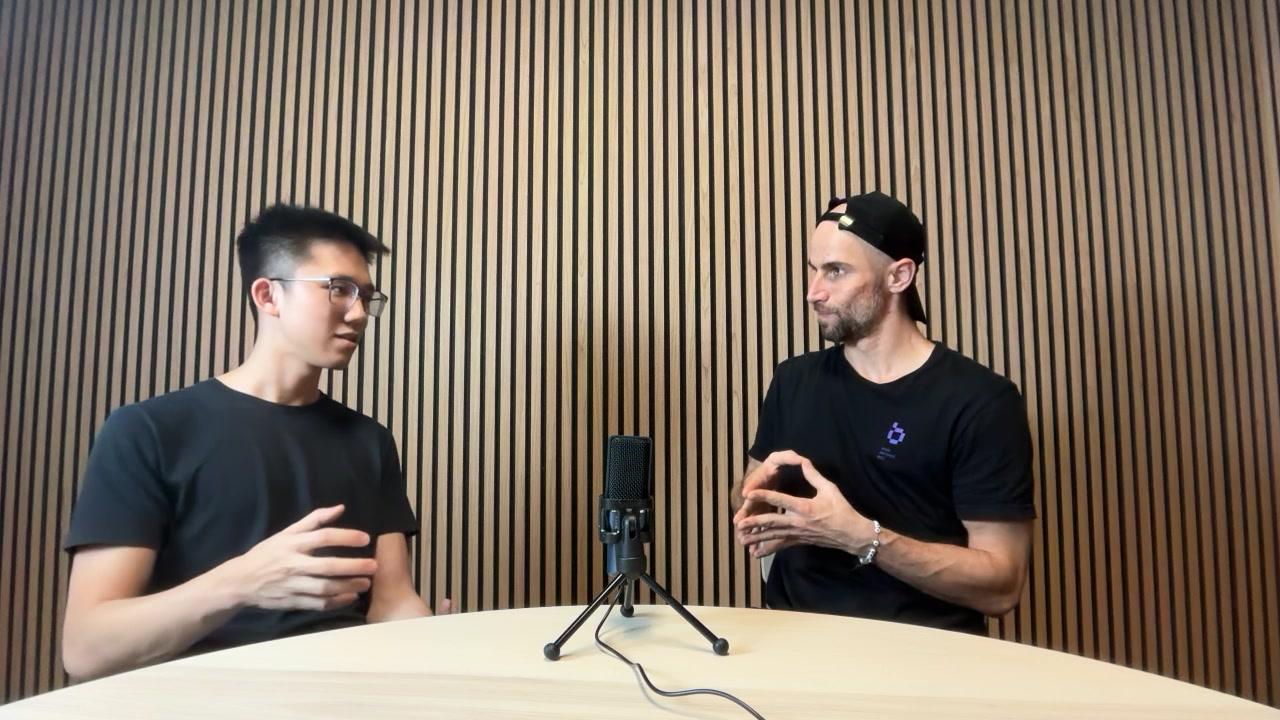
The best stretch of the conversation was about risk. Last September, Stick 'Em made the Hult Prize final in London, but Kai was in mandatory national service in Singapore and couldn't leave the country without permission. He calculated it: fly secretly, and if they win a million dollars, a week in jail is worth it. He went. They won.
The second story is tamer but just as telling. Singapore's president publishes his email address. So Kai, fresh off the win, simply wrote to him, and within a week was shaking hands at the Istana. “If I had a boring mentality, if I didn't dare to play outside the system, I wouldn't have taken the risk. The outcome is usually so much greater than the potential risk.”
Documenting a life, and the Experience Cube
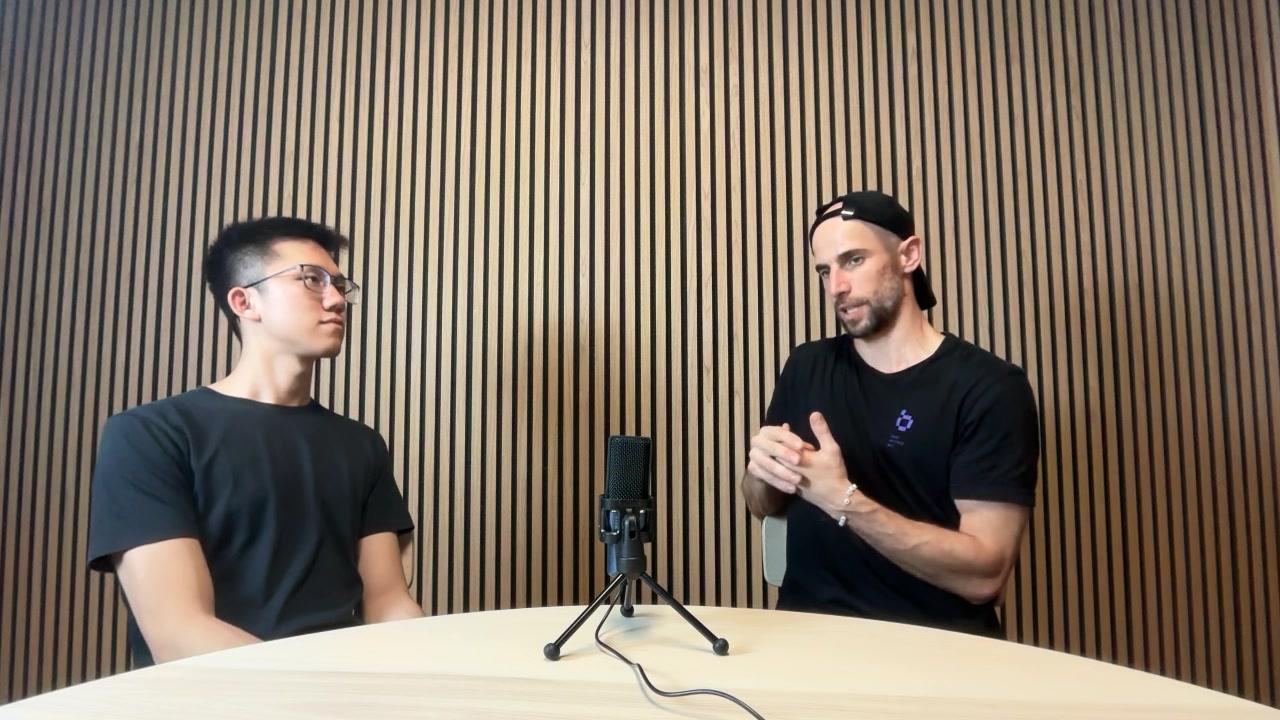
We ended on something close to my own work, journaling. Kai connected it back to self-awareness and a framework he'd just learned, the Experience Cube: what you observed, what you thought, what you felt, and what you want. “Many people just observe. They don't think hard, don't notice how they feel, don't know what they want.” Documenting, done honestly, is how you close that gap, the same reason Da Vinci filled notebooks the moment paper became affordable.
Maybe the cleanest summary of Kai is a line he borrowed from Acumen's Jacqueline Novogratz: a good social entrepreneur holds the tension between making money and making impact, and never lets either side seduce them. He's very good at holding it.
Key takeaways
- Problem clarity is the moat. Six years, no pivot, because he understood the problem before he built the product.
- Accessibility is a design choice. Chopsticks, three-hour training, and open-ended lessons are what let STEAM reach a floating village or a rural classroom.
- Don't guide the kids. Real problem-solving comes from building, not copying, and that's why he'd delay AI, not rush it.
- Take the risk, but know it's a privilege. The upside usually dwarfs the downside: for those who can afford the downside.
- Hold the tension. Between profit and impact, awareness and ambition, giving in to either means you've stopped.
You can find Kai on Instagram at @kaiiconic and on LinkedIn, and Stick 'Em at @stickem.sg.