

Some guests are hard to summarize because they've done one thing deeply. Peter Donaldson is hard to summarize because he's done several things deeply, and they turn out to rhyme. He picked up the cello at three and the piano at six, spent fifteen years in China producing music and throwing festivals, read the Bitcoin white paper, and now leads business development at a company building an exchange for tokenized stocks.
We met at Network School, first at the Muay Thai booth at the NS fair, then hauling mats after a yoga class, and this conversation is the long version of “so, what's your story?”
From cassette tapes to a life in music
Peter's first computer was a Commodore that loaded games from a cassette tape, flick up the little door on the corner, press play, and wait half an hour for a program to appear. That patience for a slow-loading machine sits oddly well next to the rest of his story, which is mostly about following sound wherever it led.
The music came early and from home: a mother who had been a ballet dancer, a grandmother who taught violin, cello at three, piano at six, theory, singing, orchestra. But the turning point, he says, was finding his own taste rather than his mother's. Hearing Jamiroquai opened a door to Stevie Wonder, then Motown, Roy Ayers, and the whole lineage of funk and soul. His brother, a DJ, filled the house with sound systems, and Peter eventually found his own corner of electronic music in psychedelic trance. He can trace the grooves of a Shpongle or Green Nuns of the Revolution track back to the funk pioneers and their Moog synthesizers, which is why, he says, he doesn't really hear genres as separate things. They're all the same conversation, influencing each other across decades.
Fifteen years in China
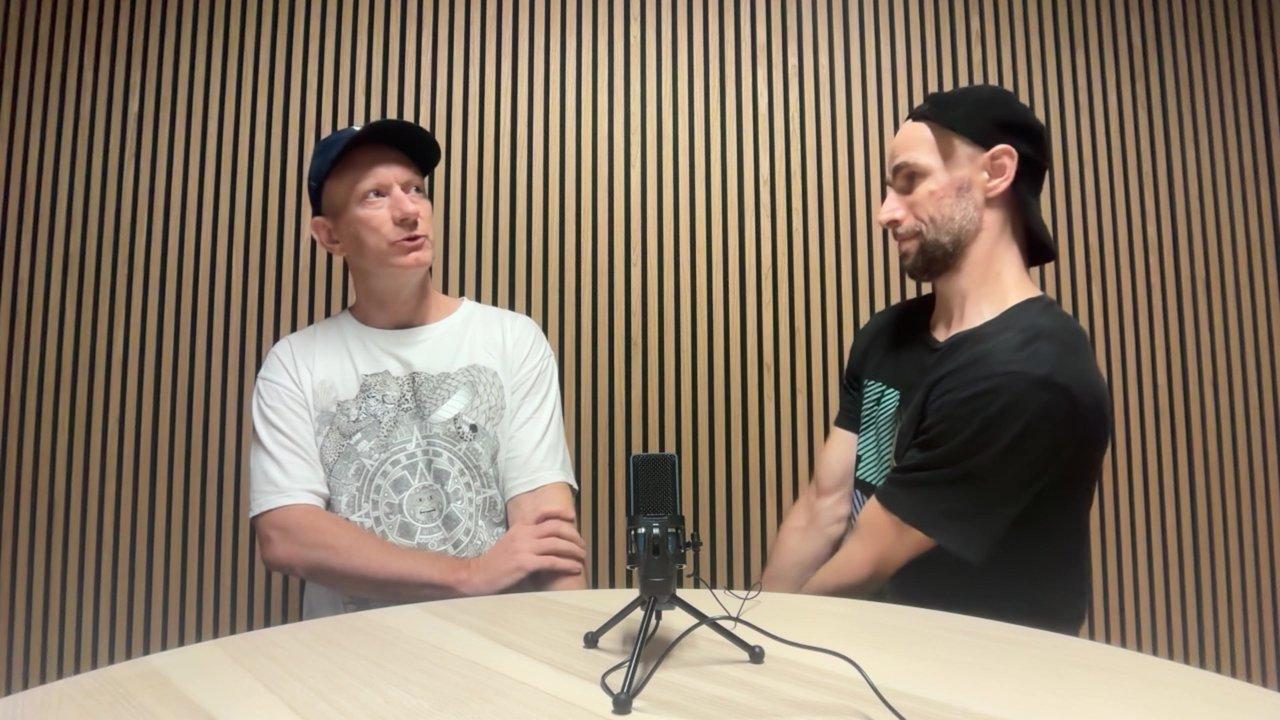
Peter went to China almost by accident and stayed for fifteen years. It started with tai chi in Manchester, taken up for health reasons, and specifically Chen style, which led him and his teacher to Chenjiagou, the village in Henan where the style originates, not far from the Shaolin Temple. When two of the record labels he worked for went bust, he went back to university to learn Chinese, “the only other thing I was interested in outside of music.” An exchange year in Beijing turned into a move, and the move turned into a decade and a half.
In Yunnan he built the thing he's proudest of as a producer: Spirit Tribe, a festival on a patch of land outside Kunming with room for three stages of electronic dance music, run for about four years until COVID made live events impossible. Before the fixed site there were one-off parties in spectacular places, including one where you walked five kilometres into a valley, across streams and through forest, to reach a cave with a stream running past it. The DJ played from inside the cave; the dancefloor was the sand out front, mountains on either side. It was, understandably, called Forest Magic.
The Bitcoin white paper, and a music app that paid artists daily
The pivot into technology came through music, too. A famous Chinese radio-DJ friend launched a tech company in Shenzhen and asked Peter to help build a music-streaming platform to fix the pain points of the recorded-music industry, using blockchain. Writing the project's own white paper sent Peter to the Bitcoin white paper, and, as he puts it, “the penny dropped.” He got blockchain-pilled.
The product, Soundario, was genuinely ahead of its time. Artists uploaded directly, cutting out the middlemen, and got paid within 24 hours of a play: payments calculated on precise measurements of total play time divided by the artists on the platform. It even had a built-in curation reward: build a popular playlist and you'd earn a share of the play time, but never more than the creator. They shipped it to the App Store and Android and were chasing distribution deals. The problem was timing. In 2017 and 2018 the venture money was flowing into layer ones and infrastructure, not consumer apps, and the company ran out of runway despite doing well. “We were too early” the recurring epitaph of good ideas.
MEV, and an old human behavior on a new rail
From there Peter moved through the industry, a small exchange trading exotic options, a bigger one, and then, through a former Soundario advisor who had been CTO of Huobi, a data company called EigenPhi focused on MEV transaction analysis. He caught the MEV wave near its peak, and it taught him the most, in part because it put him in rooms with some of the most influential people in Ethereum.
“It's not really a new human concept. I have an advantage of knowledge and speed, and that allows me to extract value. It's a very old pattern of human behavior, it's just how that pattern happens on a blockchain.”
His framing of MEV is the sort of thing this show exists for. Technically it began as “miner extractable value” miners reordering transactions in a block, and grew into “maximal extractable value,” an edge that lets someone extract value through reordering, front-running, or sandwich attacks. But Peter refuses to treat it as something new. The blockchain is just where this version of a very old game plays out.
Tokenized equities: what STOX is building
Today Peter works on STOX, where he's known the founding team for years, he first met one co-founder on a project to tokenize gold, and stayed in touch as they built a higher-level language for the EVM that now underpins their tokenization stack. STOX is a fully intent-based order-book DEX for tokenized equities, live on Base with close to twenty assets.
He draws a clear line between this and a typical automated market maker. An AMM is passive liquidity: it sits somewhere and waits to be used. On STOX, every order carries an intention, a user says “I want this at this price, or as close as possible,” and other participants compete to solve that order efficiently. The tokens are fully one-to-one backed: each on-chain token has an underlying off-chain share held in custody, and a qualified holder can redeem it back into the real share and exit into the traditional system. Peter's own role is less about the mechanism and more about connective tissue, finding lending protocols, exchanges and use cases so the tokens actually get adopted. “My job,” he says, “is creating options.”
Convenience that builds community
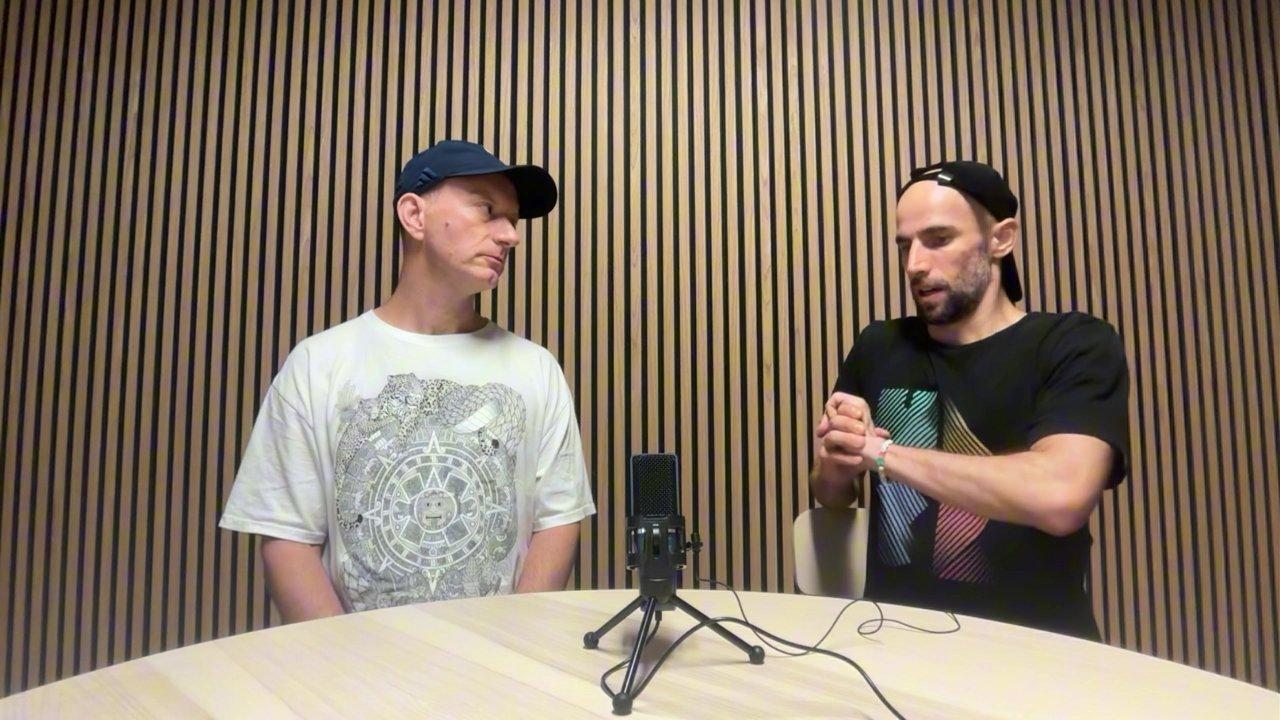
The most quietly profound part of the conversation isn't about crypto at all. Asked what he makes of Network School, Peter offers a small thesis about technology. Most modern technology creates convenience, and convenience tends to create isolation: you can do everything on your own. What impressed him here was seeing technologists point that same convenience the other way.
It's not convenient to leave your house, get to the gym, or set up a dinner conversation; here, the whole environment: two gyms, co-working, co-living, workshops, events, makes community “effortless.” You can dip in and out, say hi in passing or talk for an hour, as much as you want. That flip, from technology-as-isolation to technology-as-augmented-community, is why he's decided to stay long-term.
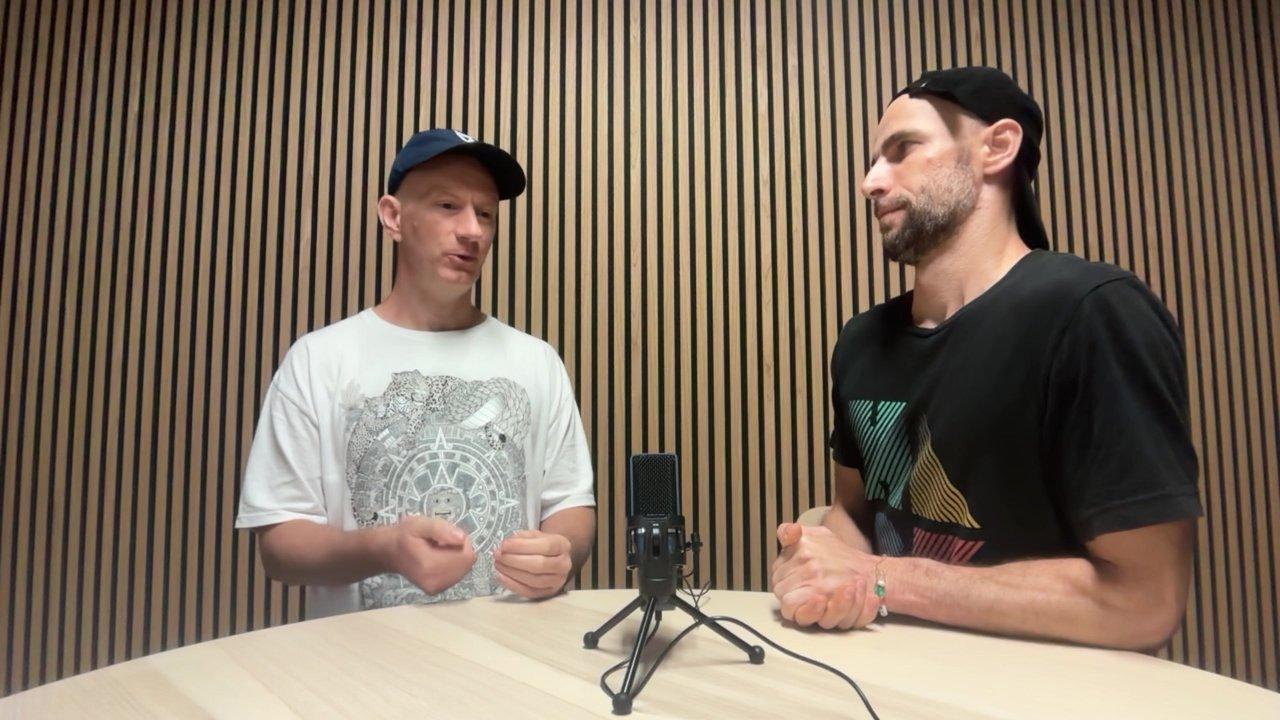
He rounds the hour out with the practices he's building into a healthier routine: kettlebells, meditation, and Kalaripayattu, an old martial art from Kerala whose animal-posture conditioning he does as a kind of fluid yoga. And he leaves a piece of advice that fits all three of his lives at once. In a world that bombards us with information of wildly varying quality, the key skill is discernment: judging not what's profitable but what's genuinely beneficial, for you and for others. “Think about what you post before you post it.”
Key takeaways
- Good ideas fail on timing, not merit. Soundario paid artists within 24 hours in 2017, the tech worked; the market wasn't ready.
- MEV is an old human pattern, not a new invention: an edge of knowledge and speed, expressed on a blockchain.
- Intent-based trading vs. an AMM: every order carries a price and an intention, instead of sitting as passive liquidity.
- Fully-backed tokenized equities are redeemable, each token maps to a real share in custody that a qualified holder can exit into fiat.
- Convenience usually isolates; the interesting move is to aim it at community. That's Peter's read on why Network School works.
Links & mentions
- STOX, intent-based order-book DEX for tokenized equities on Base
- Soundario, the blockchain music-streaming app Peter co-founded
- EigenPhi, the MEV / on-chain analytics company he worked at
- Spirit Tribe & Forest Magic, his festival and cave party in Yunnan, China
- Jamiroquai, Stevie Wonder, Roy Ayers, Shpongle, Green Nuns of the Revolution: his musical touchstones
- Chenjiagou (Henan) & Kalaripayattu (Kerala), the tai chi village and the martial art he practices
- Network School, Balaji Srinivasan's community, where this was recorded
- Peter's music aliases: Tone Splendor, The Sneaky Tweaker, Mr Snookums: find him on X (Mr Snookums) and LinkedIn (Peter Donaldson)