
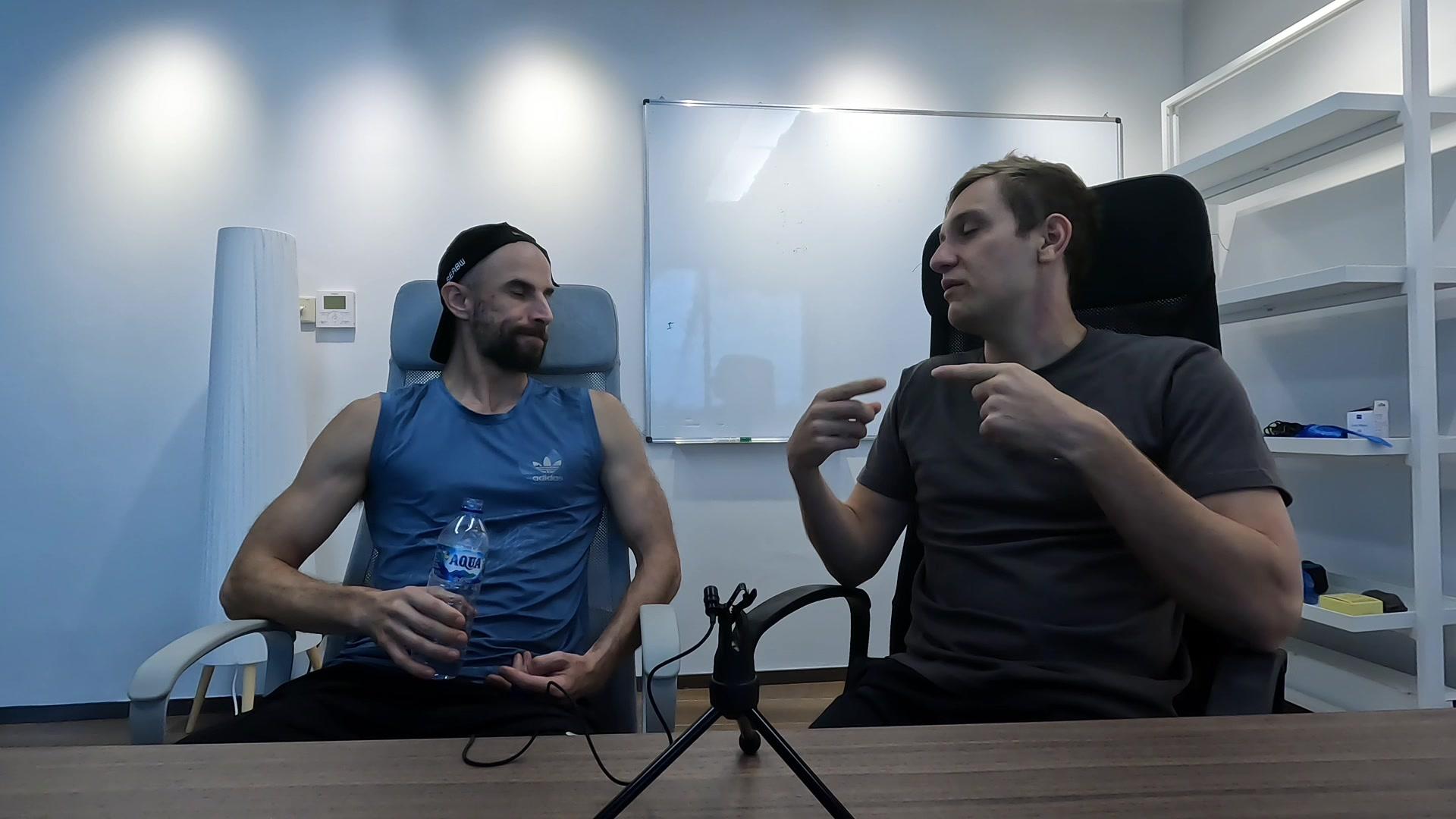
Some people find their craft in a classroom. Anton Pecherkin found his in a hackathon he almost didn't attend. In this episode of the Argo Podcast we trace a fifteen-year arc from a Tetris-only family computer in Russia to founding ContentDAO, and along the way we talk about the parts of a builder's life that don't show up on a pitch deck: the dependency errors, the unit-test arguments at 3am, and what actually changes when you build surrounded by other builders.
The accidental hackathon habit
Anton's first hackathon was a solo act. His friends bailed, so he showed up alone to a “Blockchain Founder Hackathon” knowing nothing about blockchain, a little afraid, mostly planning to watch. A two-person team needed a third who could code. He knew JavaScript, they handed him the Solidity docs, and two days later they took first place.
That win set a pattern. He went back to university, pulled in friends, and started traveling. Between 2018 and 2020 the team competed across Spain, Germany, France and beyond, and by Anton's count they won something like forty to fifty hackathons. The win rate, when they were focused, sat around 80 to 90 percent. He is refreshingly unmysterious about how: the trick was to treat the judges as the spec. Ask them what they wanted, prototype it, show it, ask again, and iterate until the demo landed. On that same circuit he crossed paths with teams that later became names, like 1inch, sometimes finishing first while they finished second, sometimes the other way around.
Green energy on a Singapore island
The hackathon circuit turned into a company. From 2020 to 2023 Anton's team ran a blockchain software agency that shipped around twenty products for clients, most of them private-chain systems. The one he keeps coming back to is a green-energy certificate platform: NFT certificates issued for each megawatt of renewable energy, built on Hyperledger Besu and Hyperledger Fabric, and run as a government-level pilot.
The most vivid piece of it reached Singapore. The system was tested around Semakau Island, tied to work on renewable-energy microgrids, where solar panels and other sources produce and consume energy and a blockchain layer balances and settles the flows. Anton has since given a workshop on it at Network School. It is a good reminder that “blockchain for X” is not always vaporware; sometimes it is a metering problem with real panels and real megawatts behind it.
Loving algorithms, hating dependency hell
One of the most relatable stretches of the conversation has nothing to do with crypto. Anton studied physics at Moscow State University, and he is candid that he drifted toward physics partly because he loved the algorithmic thinking of programming but disliked everything around it. The idea was the fun part. Then came the packages, the dependencies, the errors you paste into Google and stare at without understanding. “You have to sacrifice a lot” of time, he says, just to make the idea run.
Anyone who has coded will nod. It also sets up one of the throughlines of the episode: the tools have finally started to absorb that grind. Which is where the more recent chapter of his story begins.
Building in a community of builders
Anton found Network School the way a lot of people do, through a Balaji talk he half-remembered and an application he almost forgot about. What made him extend a planned one-month stay into something longer was not the beach. It was the density of builders. When the people around you are shipping and sharing what they ship, he says, it adds energy to build yourself.
It also accelerated his own tooling. He describes moving from writing code by hand with an assistant resolving packages, to a fuller agentic flow with Claude Code, and credits the community and its events for how fast he picked it up. His honest read: if he had stayed outside a community like this, he would probably still use coding agents, just much less, and learn them much more slowly.
An honest test of the journaling pitch
Because this is the Argo Podcast, Konrad pitched Anton on Argo itself, a private AI journaling app, and asked the harder question: would you actually use it? Anton's answer is the useful kind, because it is not a yes. He can see the value of accumulating structured personal data you can later search and brainstorm against. What he is honest about is the habit. He doesn't keep a daily reflective journal today; his notes are mostly work to-dos, morning planning and evening review. The real obstacle, he says, isn't the product, it's forming and keeping the habit.
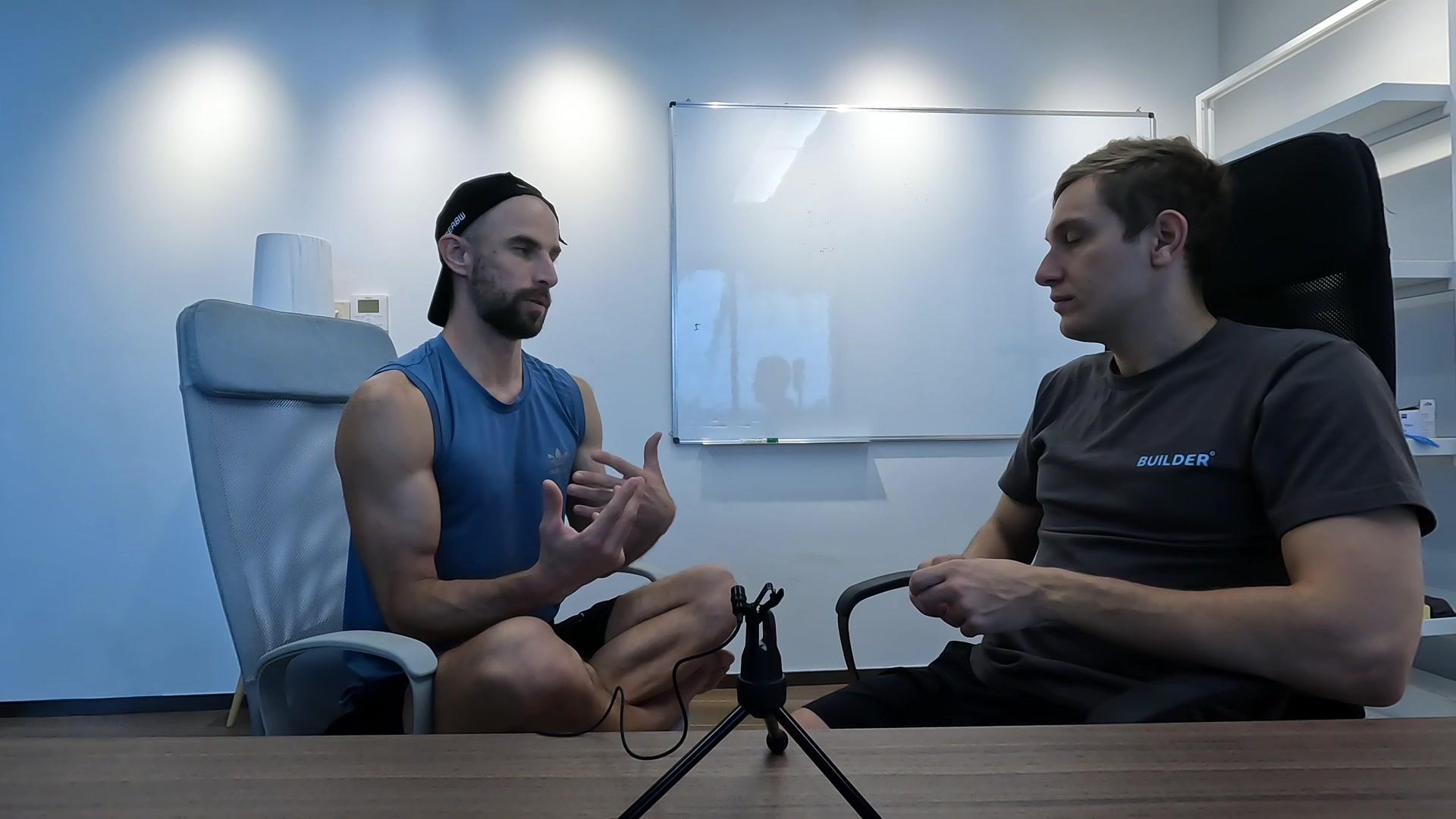
That is exactly the feedback a founder needs, and the conversation turns it into a small thesis: maybe the practice has to be marketed as a practice, something closer to a cultural habit like a martial art, with a community and a story around it, rather than just an app with a streak counter.
ContentDAO in the wild
The last third of the episode is Anton's current company. ContentDAO grew out of an earlier product, B4B.app, a marketplace that scored around a thousand influencers and let brands hire them with escrow-backed guarantees. It worked, but it didn't scale; matching one creator to one brief by hand is slow. So they sold that tech into their agency and rebuilt around a bigger idea.
The framing is the clearest part. Think of Google Ads: you set a budget and some targeting, and traffic comes back with metrics you can measure. ContentDAO wants to be that, except the “inventory” is a long tail of small, trusted content creators instead of a single ad network. A brand sets a budget and a goal, an algorithm allocates personalized tasks only to creators whose audience and topics fit, and each creator is asked for one piece of quality content. Payment is held in escrow and released when the post ships, which removes the incentive to flood the system with spam or bots. The bet underneath it: small creators, roughly 10,000 to 100,000 followers, are underserved by a monetization market that overpays a handful of large accounts, and connecting them to products at scale is a very large opportunity.
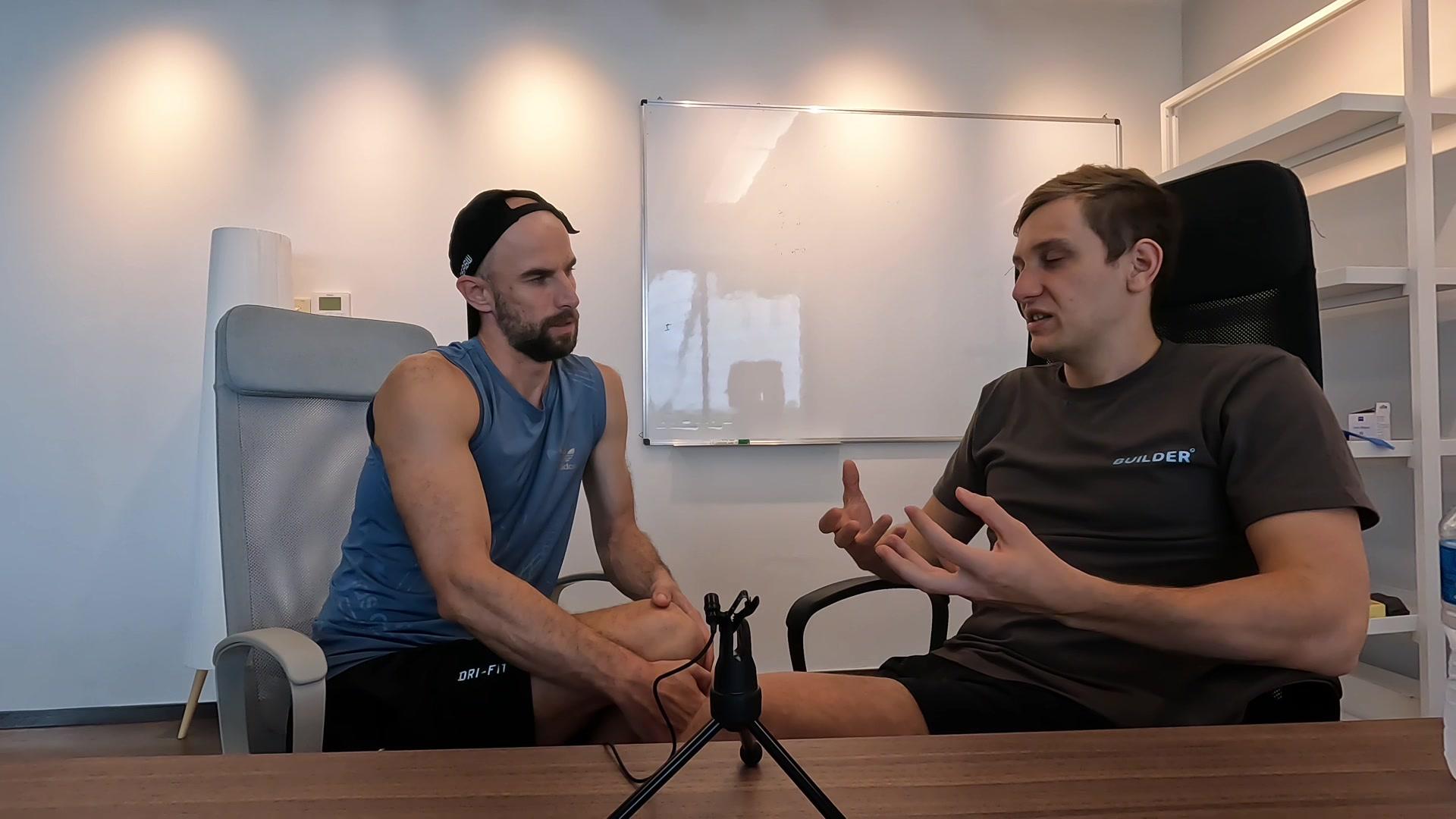
The proof point he shares is concrete. A founder friend, Daniel, used ContentDAO for his prediction-market startup, Belief Market. A first run of about $100 produced roughly 20 pieces of content in three days, mostly from creators across Vietnam, Indonesia and Malaysia, at a customer-acquisition cost he measured at about three times better than his other channels. Daniel moved to a weekly cadence, and Anton's read is that each run gets better as the algorithm learns. ContentDAO has raised early grant funding from the Stellar ecosystem and is now preparing to raise again to scale.
Key takeaways
- Learning by building beats learning in theory: Anton’s whole career grew out of showing up to hackathons and treating the judges’ feedback as the spec.
- “Blockchain for X” can be real. A green-energy certificate pilot tied to Semakau Island is a metering-and-settlement problem, not a slogan.
- The grind most builders hate is the tooling around the idea, and agentic coding is finally eating that grind.
- Community changes your pace. Proximity to other builders accelerated both Anton’s shipping and his adoption of new tools.
- Honest user feedback is a gift. The obstacle to a journaling product isn’t the features, it’s helping people form the habit.
- ContentDAO’s wedge is fairness and fit: pay small, trusted creators through escrow for one quality post, and match by audience instead of blasting the biggest accounts.
Links & mentions
- Anton Pecherkin on LinkedIn, connect with the guest
- ContentDAO on X, follow the company
- ContentDAO, Anton's current company, a distribution channel for small content creators
- B4B.app, his earlier influencer / KOL marketplace
- StartBlock, his blockchain agency; past work is under /cases
- Semakau Island / REIDS, Renewable Energy Integration Demonstrator, Singapore
- Hyperledger Besu and Hyperledger Fabric, private blockchain frameworks used in the green-energy pilot
- Skoltech / Yuri Yanovich, his master’s advisor in blockchain research
- Stellar, the ecosystem that gave ContentDAO its first grant
- Belief Market, Daniel’s prediction-market startup
- Claude Code, the tool behind his shift to agentic coding