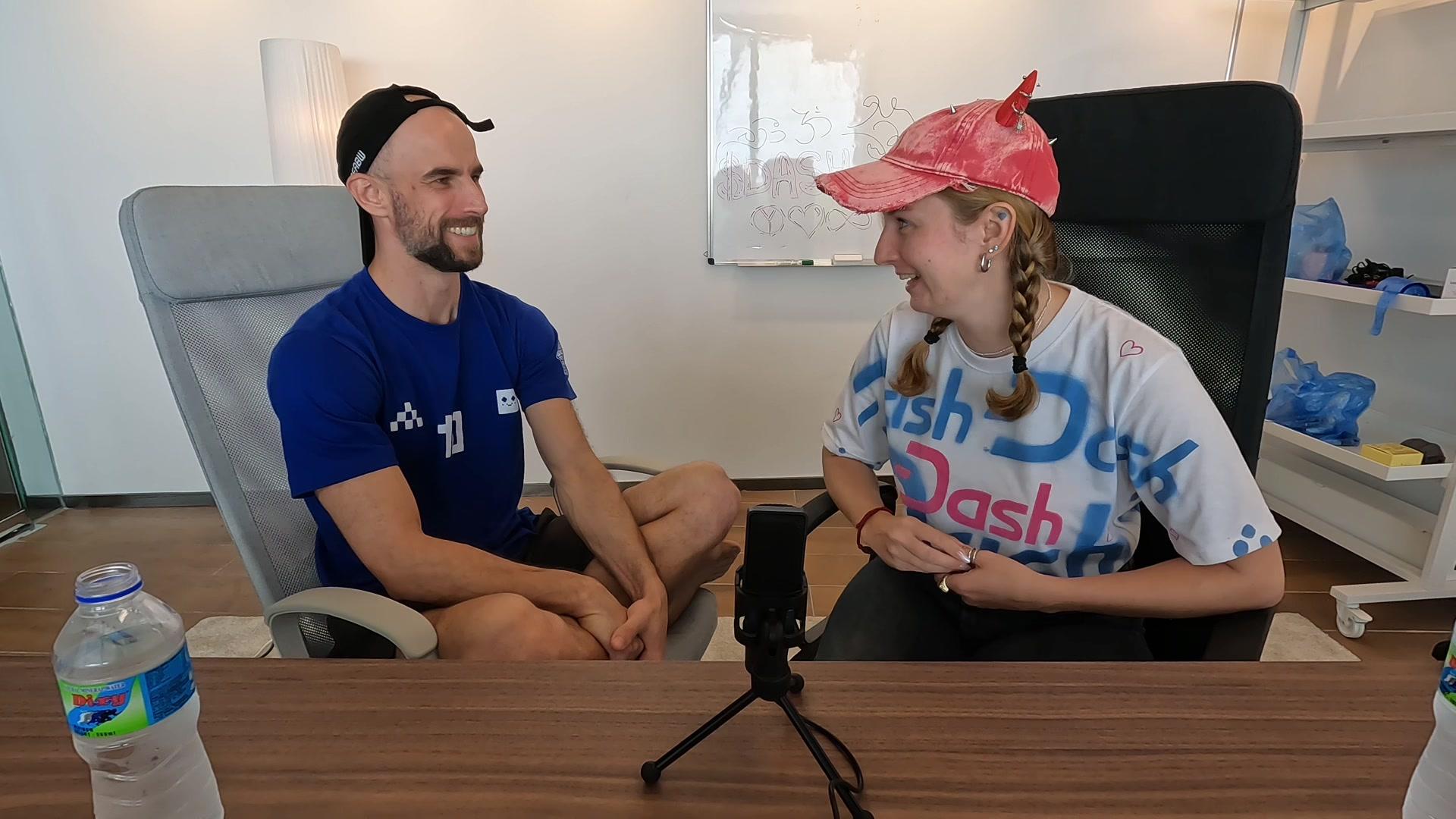
Some people collect job titles. Daria Chernozub, who everyone calls Dasha, has collected worlds: corporate banking, government innovation labs, Web3 startups, hackathon circuits, spiritual communities on a Thai island, and the crypto scene now forming in Vietnam. She currently leads global adoption for Dash. When we sat down at Network School, what came through was not a resume but a way of moving through all of these places, and a stubborn belief that the future can be good if enough of the right people decide to build it.
A coin with her name
Dasha's crypto story starts about nine years ago, inside a Russian central bank's digital sandbox. She was surrounded by young engineers who told her to put money into Bitcoin and Dash. Her reasoning for the second one was refreshingly human: “I'm Dasha. Of course I will buy Dash.” It became her first coin.
That sandbox was a serious place, though. She mentions, almost in passing, that Vitalik Buterin once came to lecture there around 2016, and that the Russian Central Bank Association later built Masterchain, a blockchain on top of Ethereum. She spent years inside big banks building innovation departments, connecting startups to corporations, and moving capital from large institutions down to early-stage teams. She also learned what she did not want: the nine-to-five rules and slow committees that made real innovation nearly impossible.
Looking for the real thing
When Dasha left corporate life for Cyprus and Web3, she went looking for the most decentralized project she could find. She worked across the Polygon ecosystem, the Internet Computer, and Solana startups, and kept hitting the same wall. Most projects had a CEO, a foundation, someone at the center deciding everything. Nodes might be spread around the world, but governance was not.
Dash was different in a way she could point to: masternode owners who actually vote each month on proposals, roughly 2,500 of them, deciding how the network spends and where it goes. Her test for decentralization is not the map of the nodes but the question of who holds the vote. That distinction is the reason she now stands on stages telling people about Dash instead of a network she felt was decentralized in name only.
Her test for decentralization is not the map of the nodes but the question of who holds the vote.
The person before the technologist
One of my favorite parts of these conversations is asking about someone's first computer. Dasha's answer went somewhere I did not expect. She first used one at four years old, at her grandmother's kindergarten, printing outlines to color in. But she also does not have binocular vision, so as a child she spent hours in front of a computer running exercises that trained both of her eyes to work together instead of letting one go lazy.
Then she said something surprising for someone in her field: “I hate computers.” She is not an engineer, and she has always leaned on friends who are. What excites her about this moment in AI is exactly that friction disappearing, the ability to just talk to a machine and have it understand. Her whole career has been about making technology usable for people, so an interface that finally meets normal people where they are feels like a dream she has had for a long time.
Super Protocol, hackathons, and a backpack in Switzerland
In Cyprus she did DevRel for Super Protocol, which combines Polygon with Intel SGX to let companies compute on each other's data without exposing it. “Data is the new gold,” she said, and her job was the specific craft of selling to developers rather than to a general crowd: developers to developers, their own conferences, their own language. She ran more than twenty hackathons across banks, ICP, and Solana, including a Solana finals during Apex in Cape Town and the first Dash hackathon in Malaysia with Nottingham University.
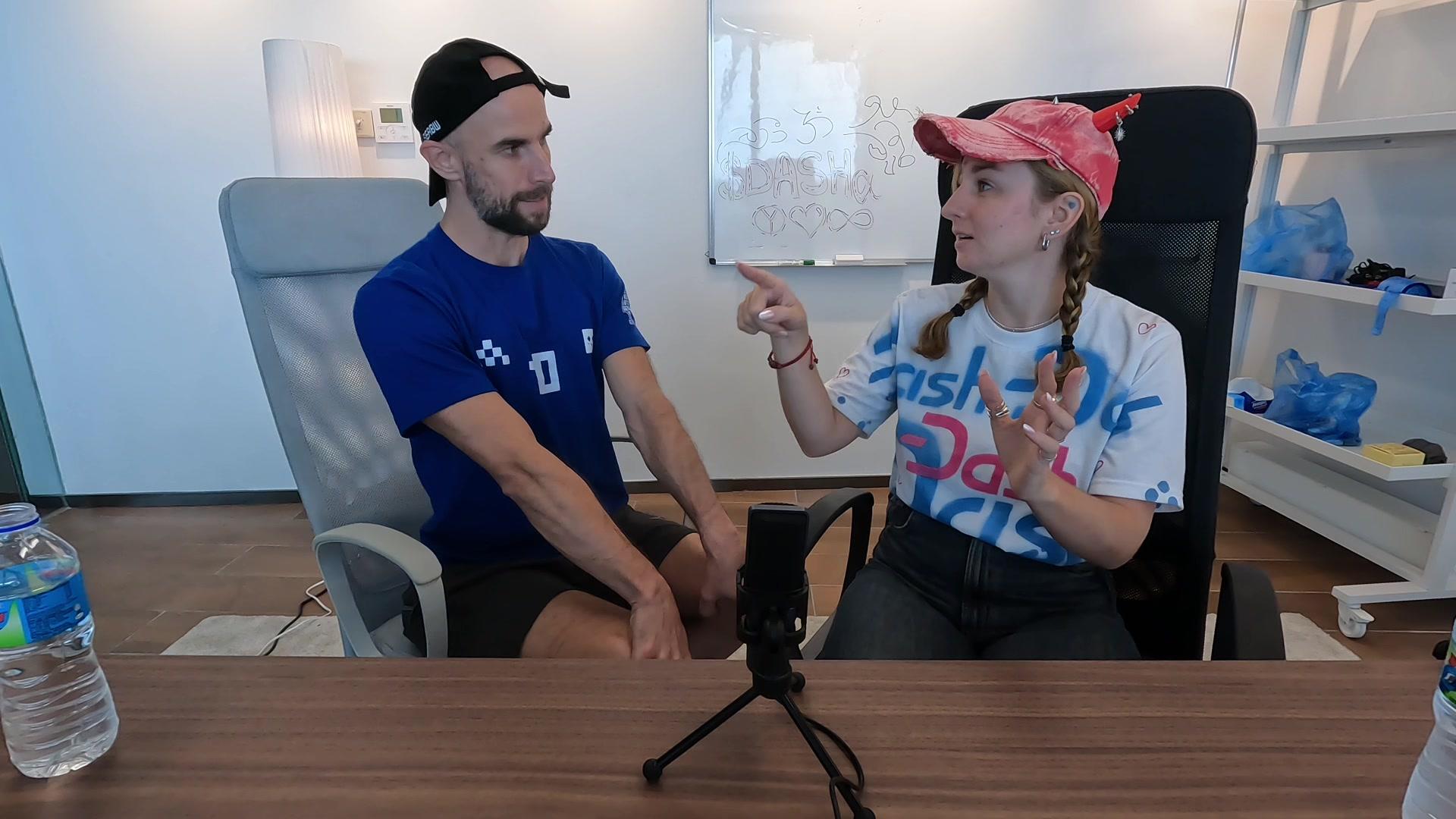
The way she joined the Internet Computer team is the most Dasha story in the episode. In Switzerland for a founders' meetup, she spotted a backpack with the Rainbow Infinity logo, recognized it as ICP, hunted down its owner, pitched him, and handed over the CV she happened to be carrying for a visa. He connected her to the global adoption team, and she spent two years there learning how big organizations attract startups and build local hubs.
A year to reset
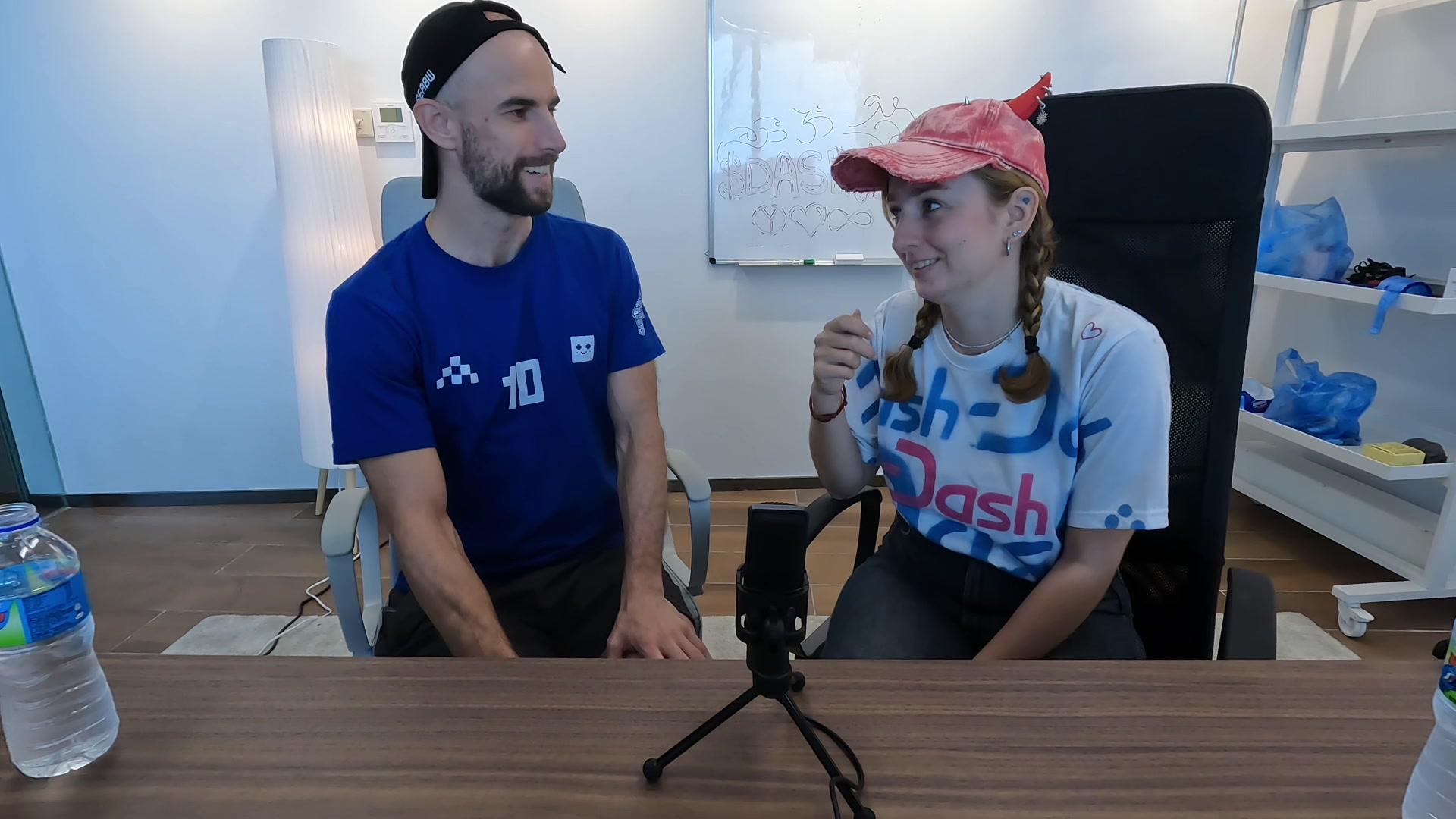
After a hard return to Moscow, Dasha moved to Koh Phangan and spent about a year on what she calls the most spiritual island in the world. She meditated, did ecstatic dance, learned about human design, and ran swap parties built on a sharing-economy instinct she picked up as a child in Denmark. It is not a detour she apologizes for. Meeting artists, mathematicians, and people who think in completely different systems is, for her, part of understanding how to work with anyone.
Going global by going local
The clearest idea in the conversation is her model for scale. To become truly global, you build on the local level. You arrive somewhere as a newbie, you will break rules you did not know existed, so first you learn the place: its channels, its influencers, its laws and taxes, even its memes. Then you hand local leaders a clear guidebook of your values so they can build your unit without losing the plot. She now applies this to Dash, whose focus is payments after twelve years, and to its new Dash Platform, a layer two for developers with decentralized storage and usernames and, soon, smart contracts.
The bright future
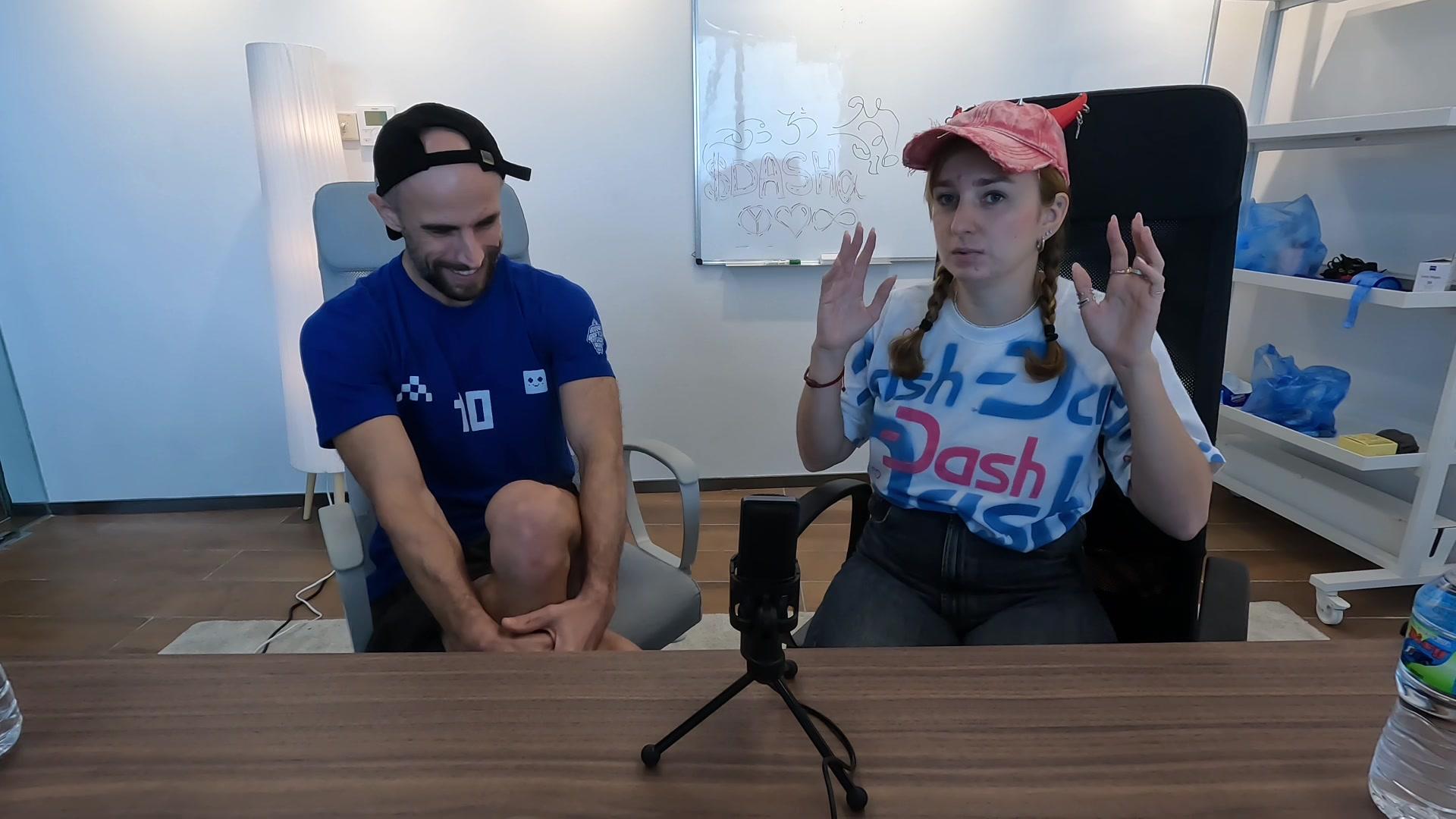
We closed on why she does all of this. Dasha wants to gather people who believe in a bright future, because she thinks the outcome is genuinely up for grabs. “If they will win, we lose, and we will live in the sad, sad world. I don't believe in this sad world.” It is an optimism that has been tested by banks, by burnout, by a lot of countries, and it is still standing. That is the kind of person this show exists to sit with for an hour.
Key takeaways
- Real decentralization is about who votes, not just where the nodes are. Dash’s masternode governance is what won her over.
- To go global, go local first: learn a place’s rules, channels, and culture before you try to build there.
- The friction between people and computers is the thing worth removing. Natural-language AI is exciting precisely because it does that.
- A career can braid many worlds, banking, Web3, hackathons, spirituality, and still keep a single thread: helping people connect and build.
Links and mentions
- Daria Chernozub (Dasha), her personal site and social links
- Dash, the payments-focused blockchain she leads adoption for
- Internet Computer Protocol (ICP), where she spent two years on global adoption
- Super Protocol, the confidential-compute project where she did DevRel
- Polygon and Solana, ecosystems she worked across
- Unicorn Embassy, the founder community where a Random Coffee match led her to Dash
- Argo, the AI journaling app discussed near the end