
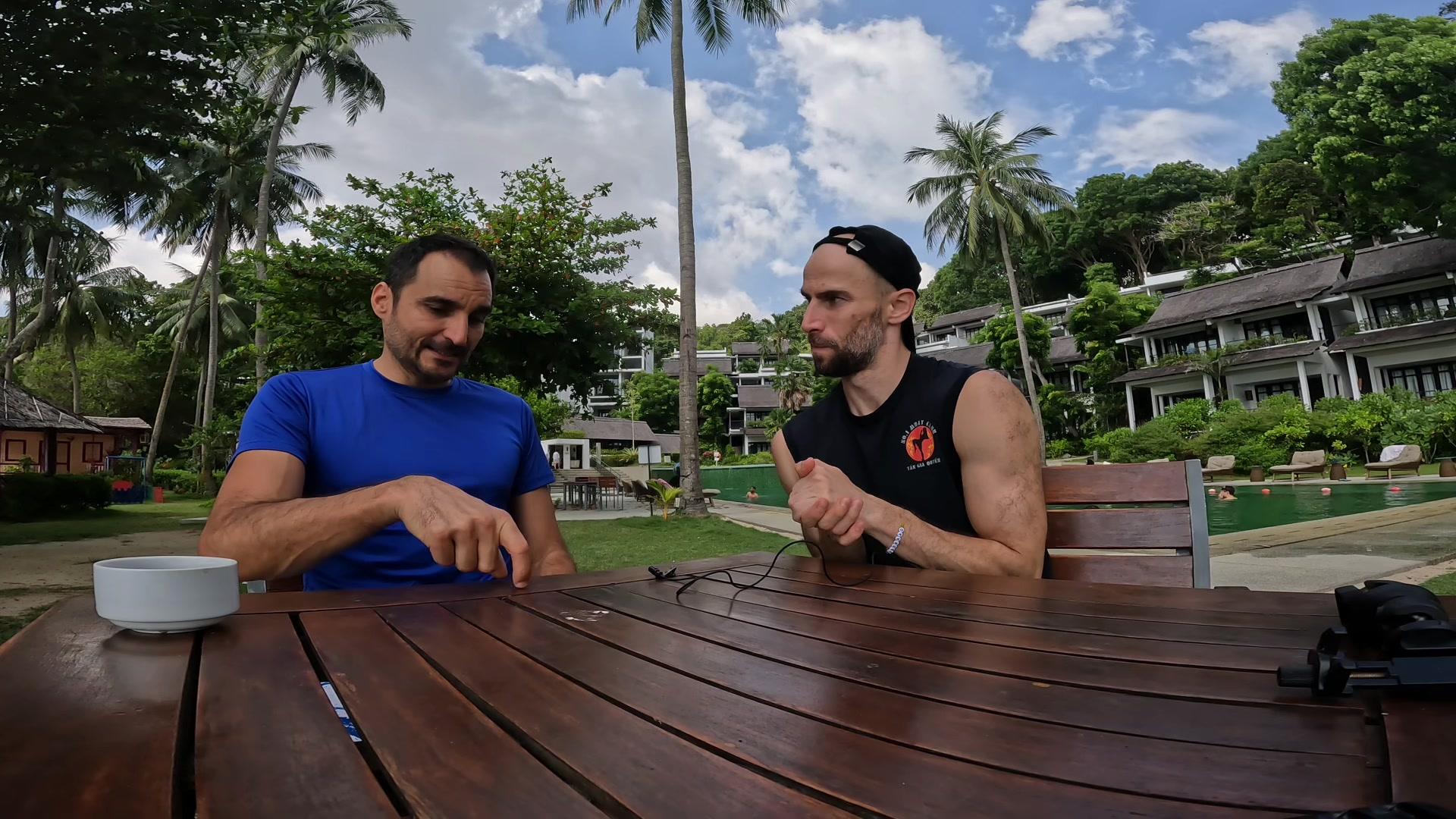
Some people arrive at technology through a job. Tony Lopez arrived through curiosity, and he never really left. In this episode of the Argo podcast, recorded at Network School, we sat down to trace his path from a childhood computer in Spain to the questions he is thinking about now. It is a long, technical life, and he is generous about explaining the parts of it that most of us take for granted.
The magic of the first machine
Tony is 48, and his first computer was an MSX his parents brought home when he was around 12. He did not ask for it. He opened the manual, connected it to the television, learned to store programs on a cassette tape, and started writing simple things in BASIC. The first program that excited him drew circles in different colors while the machine made sound.
What stayed with him was a specific question: what is actually happening inside. He describes taking a screwdriver to the case, seeing the circuits, and wanting to understand how a chip full of gates could turn moving electrons into something useful. That curiosity became a career. He later took the Nand to Tetris course, which builds a working computer from logic gates up to a running program, because he wanted the whole stack in his head.
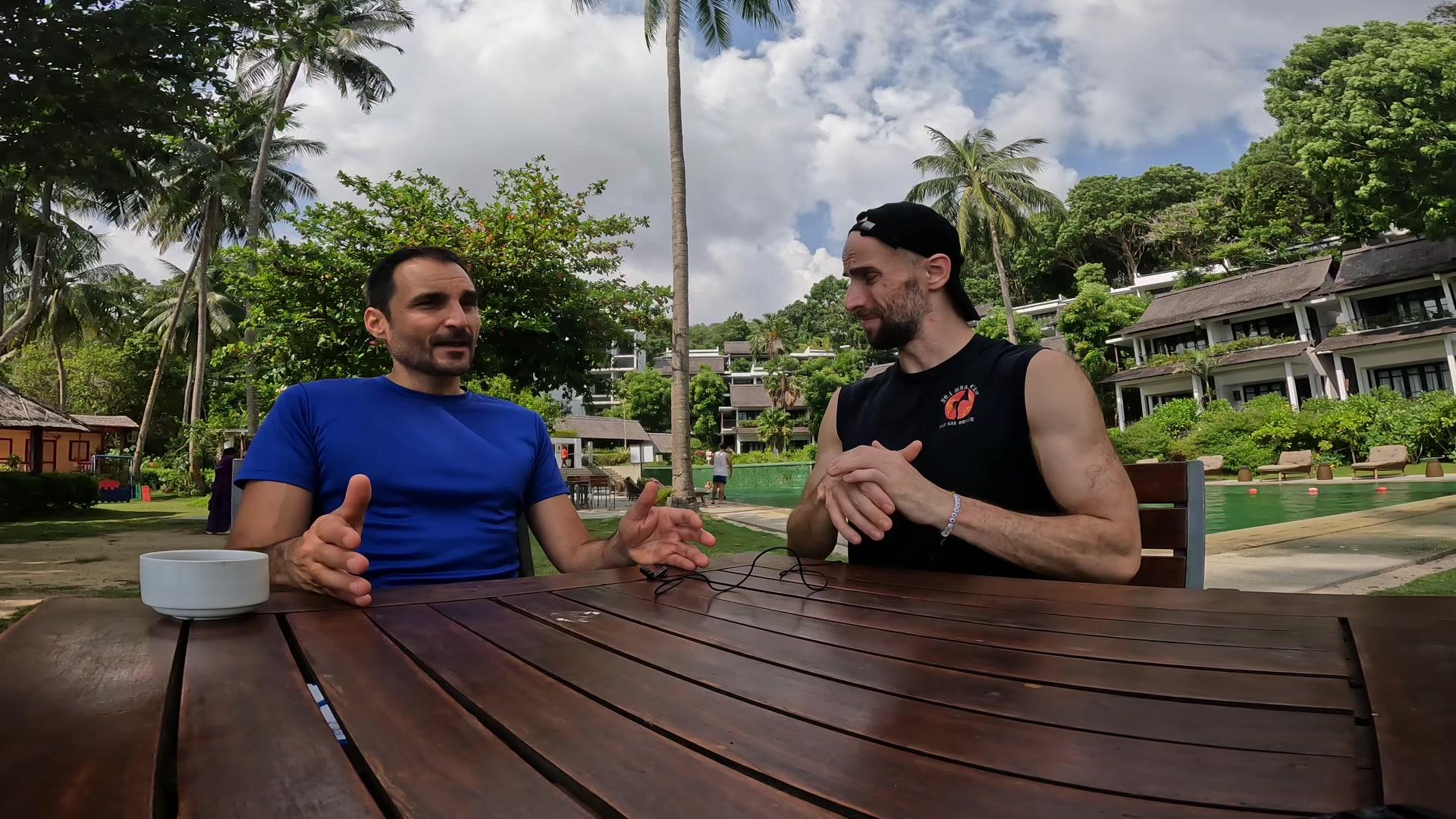
Learning robotics by teaching it
Tony studied electronics and robotics in Barcelona. He is honest that he was not an easy student and that some teachers doubted he belonged at university. He got in, and in his first year he was already helping teach robotics to students ahead of him, because he had been building since he was twelve.
One of the clearest moments in the conversation is when he explains a PID controller, the piece of logic that keeps a line-following robot on its line. He walks through it plainly: the robot reads an array of infrared sensors, and the controller corrects the motors in proportion to how far off the line it is, how fast it is drifting, and how long the error has lasted. It is a small, useful lesson in how a robot stays on course, delivered in about two minutes.
Aerospace, sailing, and a turn toward business
After university Tony worked for several years on aerospace projects connected to the European Space Agency, including work on how humans might recycle water and materials to survive on Mars, and a project to extract DNA from blood samples. He describes it as a strange, wide mix of problems, and clearly enjoyed being in over his head.
A hobby, weekend sailing races near Barcelona, nudged him toward a different question. He wanted to buy a sailboat, realized how expensive that was, and started reading about business. He read Robert Kiyosaki's “Rich Dad Poor Dad” and decided he needed to build something of his own. That thread eventually pulled him toward China.
Four years in Shenzhen
Tony ended up in Shenzhen through batteries. Working at an electronics company in Spain, he pushed it into a new line of lithium iron phosphate batteries, and found that nearly every component he needed traced back to one city. So he went. He stayed about four years.
He is careful to say he knows Shenzhen, not all of China. What struck him was the speed. He tells the history plainly: a special economic zone next to Hong Kong that grew from a small population to a very large city in about forty years, learning electronics manufacturing as it went. For Tony, it remains the fastest environment he has found for learning hardware, and he compares it, thoughtfully rather than grandly, to what Network School is trying to do for a different kind of work.
From the digital world into the physical one
The second half of the conversation is Tony's read on where things are heading. He sees AI as something that will touch every field, and he is candid that this is his own long view, the kind of thinking he says lives more in the future than the present. His core observation is concrete: the cost of intelligence is falling, and expertise that used to take years is becoming something you can turn on.
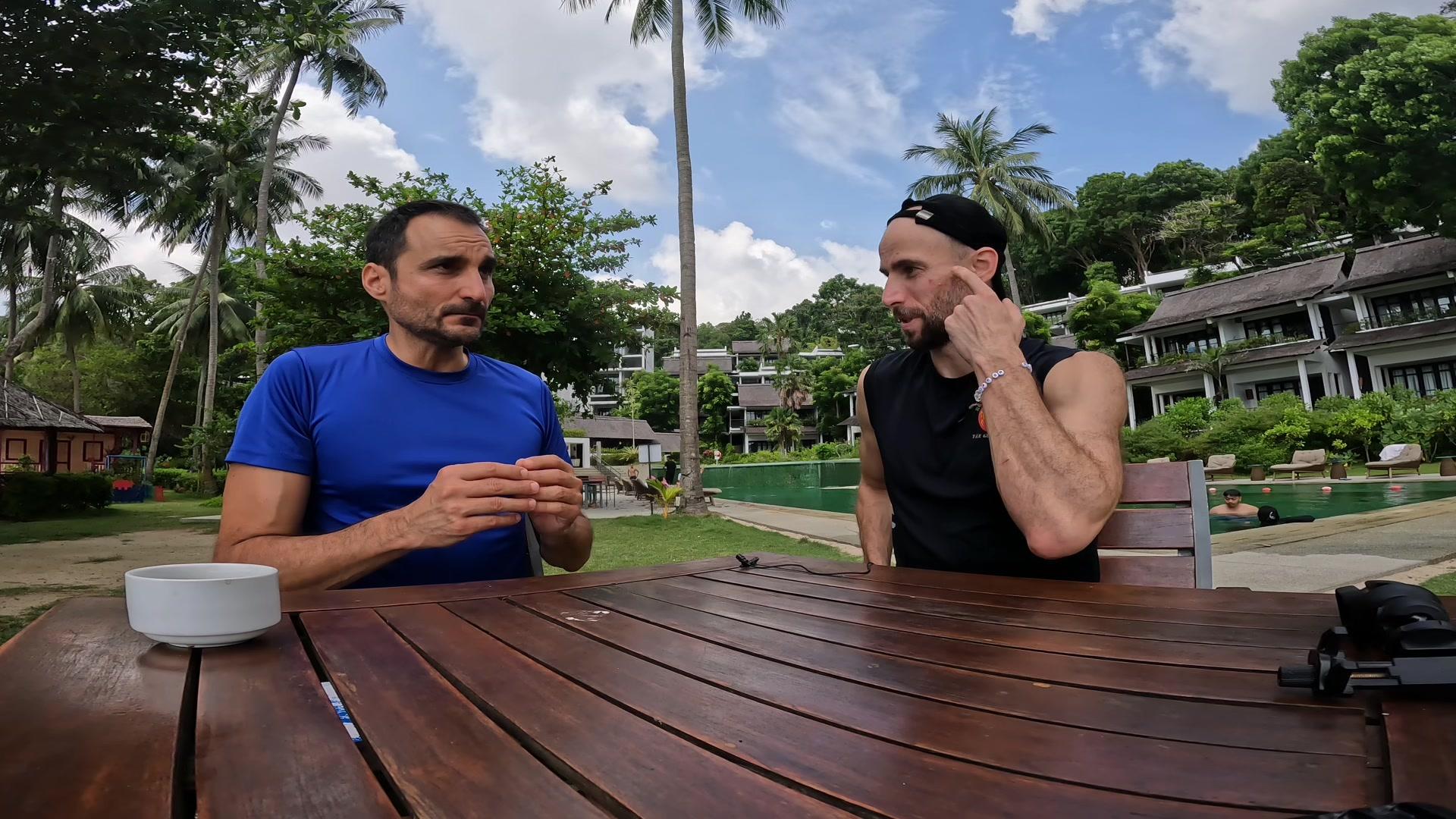
He describes a “Claude Code moment” late last year, when it began to feel like you could describe what you wanted and get a working program back without reading every line yourself. He is thoughtful about the trade-off, too. When developers stop tracking every line, we build faster, but we also loosen our grip on how the machine works underneath. He thinks robotics is the next step, carrying that same shift from the screen into the physical world.
He grounds the idea in a small story rather than a big claim. A 19-year-old at Network School who had barely used a keyboard got a robot moving in two days with Claude Code, connecting to it over Wi-Fi and writing the control scripts. Tony has spent thirty years learning robotics, and he holds that story with a mix of humility and excitement.
Where he thinks this goes
We also talked about Argo, my own project, and Tony offered a useful reframing. He is less interested in screens and more in the idea that the data you keep about yourself, your logs and your thoughts, is the valuable part, and that keeping it private matters. He expects the way we interact with computers to move toward voice and prediction over time.
His hopes for Network School are modest and specific: that a community can adapt quickly to fast change, and help others do the same. He now spends his days on Transcend Money, a YouTube channel where he studies crypto exchange order books and how automated trading agents behave, using the work as a way to push himself to build with AI every day.
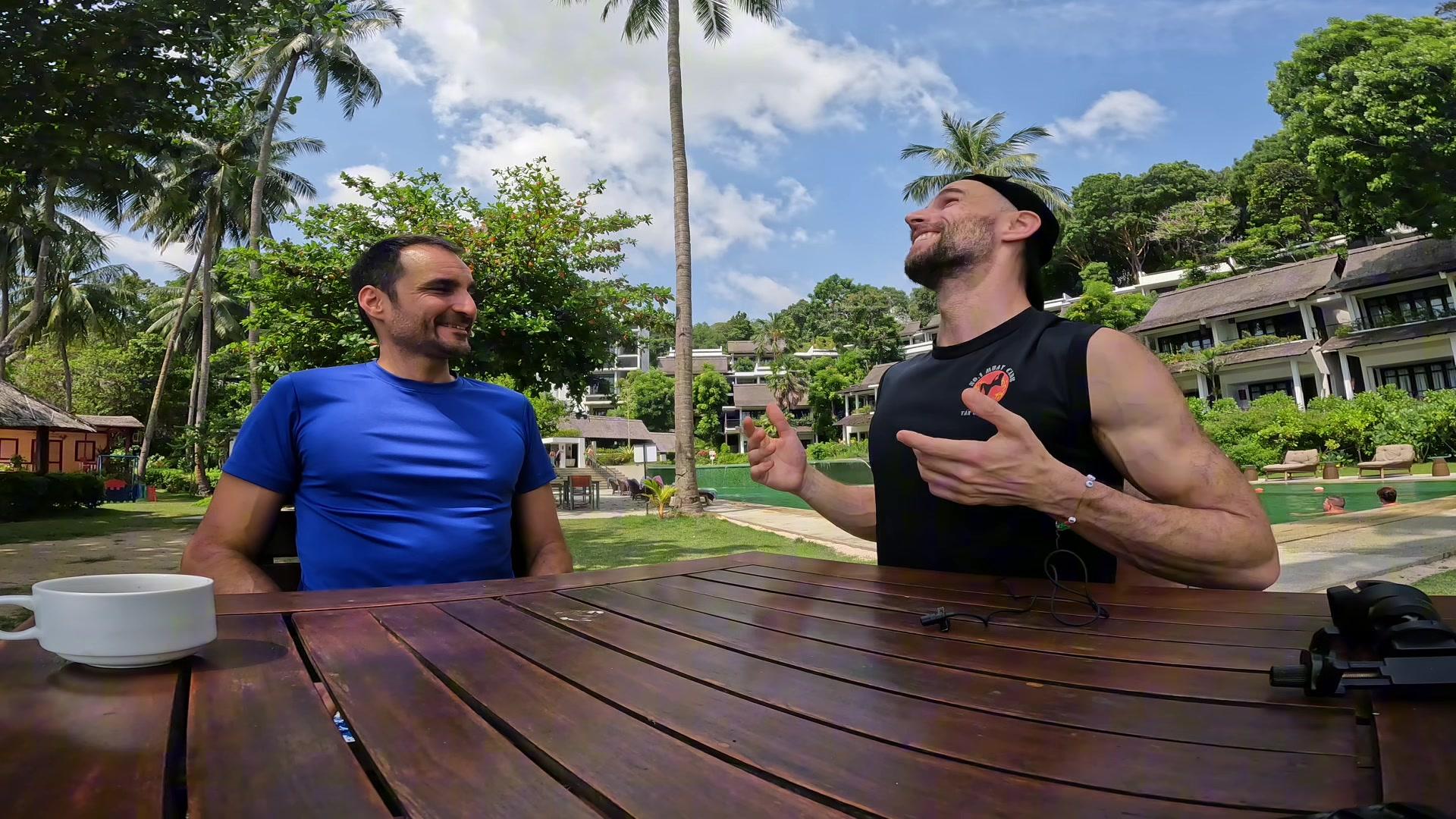
We finished with the sun going down over the palm trees. It was a calm end to a grounded hour about a life spent trying to understand how machines work, and a genuine curiosity about what they are becoming.
Key takeaways
- A PID controller keeps a robot on its line by correcting in proportion to the error, its rate of change, and its accumulation. It is a small idea that shows up everywhere in control systems.
- Tony frames Shenzhen as a learning environment first: its value, in his telling, is the speed at which you can build and iterate on hardware.
- He sees the falling cost of intelligence, and tools like Claude Code, as the throughline from software into robotics, and holds the change with both excitement and caution.
- His advice for a fast-changing field is to lean on creativity and on building things, since narrowing infinite possibilities to a useful one is still a human job.