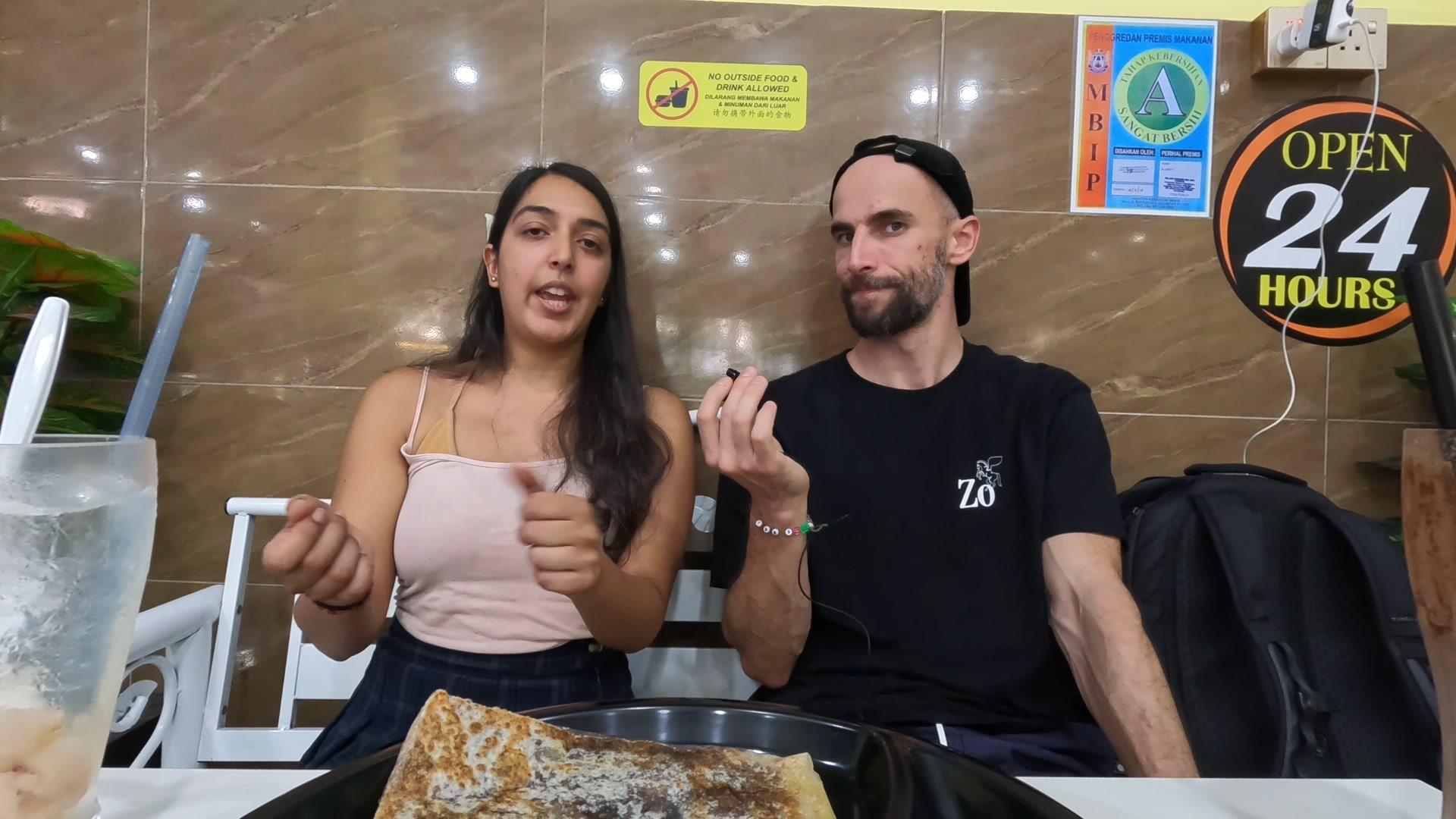
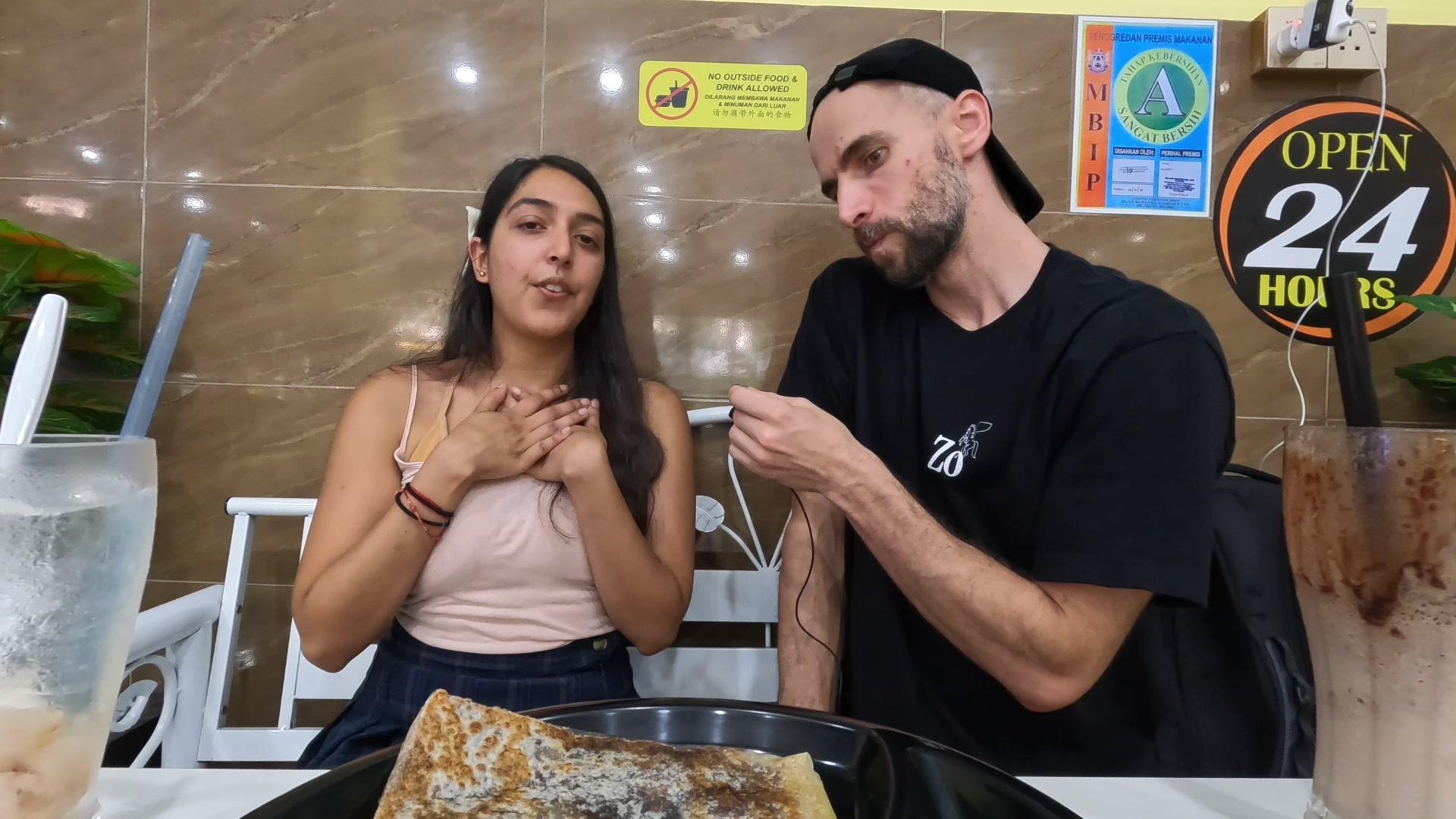
I sat down with Velveteen, whose real name is Miriam Reza, on a quiet Monday evening near Singapore, at the tail end of a Network School cohort. She introduces herself with two names for a reason. Velveteen is the artist. Miriam is the founder of Chymira, where she helps deep tech founders turn dense research into a clear story. The whole conversation lives in the space between those two identities.
Knowing early, and a car crash
Some people search for their calling. Velveteen says she never had to. She has known since she was a small child that she would be an artist, and that certainty has never wavered. She went on to study at North Carolina State University, mixing industrial design, a background in 3D, graphic design, and business administration, which is a more practical, applied blend than most people expect from an “art degree.”
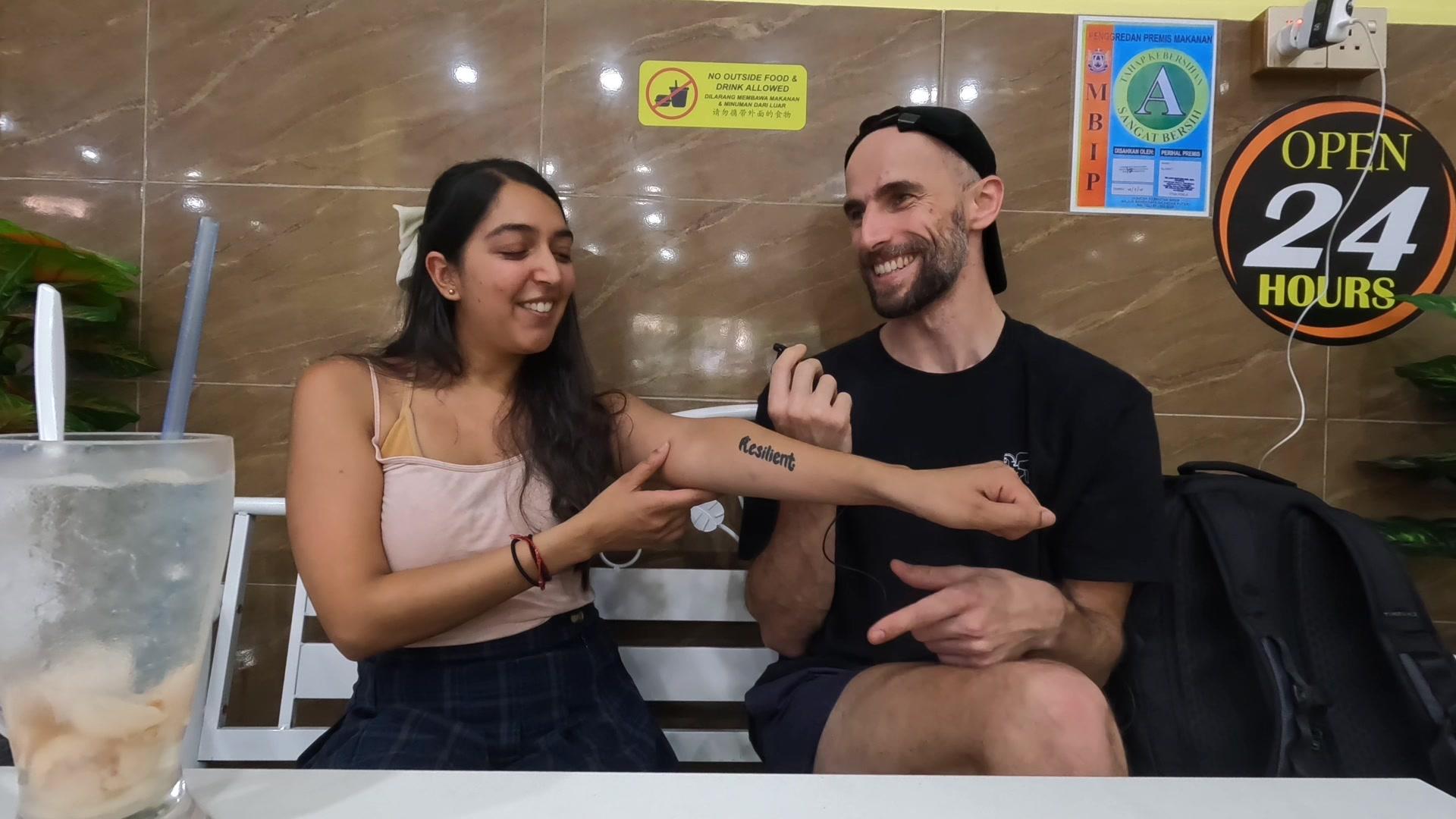
Getting there was not smooth. In her senior year of high school, the exact year you assemble a portfolio for art school, she was in a bad car crash. There was nothing left of the car, and she broke both hands. Doctors, parents, everyone around her told her to reconsider. She could not imagine any other life, so she learned to draw with her left hand and put the portfolio together anyway. She missed the deadline to apply to half the schools she wanted, including RISD, which sat at the top of her list. She still got in on nearly full grants that covered almost all of her tuition. Years later she got the word resilience tattooed on her hand, in a gothic font, to mark the 10-year anniversary of the crash. As she put it, it sits right where she can see it when she needs to see it most.
From dark charcoal to bright color
The work that got her into college looked nothing like what she makes now. Her early portfolio was heavy charcoal, dark and eerie, a reflection of the state of mind she had been in for a long time. She described one piece, all black and white: a flamingo in the water with a hand reaching in to drown it. It reads as a graceful thing being pulled down by its own beauty, an external force blocking flight.
Her art today is the deliberate opposite. Since graduating she has decided that her mission is to bring people happiness, so the work turned colorful and vibrant, with animals as a recurring motif. She is clear-eyed that this is a choice about what to amplify. She has taken criticism for making things that read as cute or bubbly, but she keeps going because of the people who tell her the work brought them joy.
When she makes a community piece, she researches the place first, its colors and its stories, then hides meaning inside the composition. For a painting she made for Island DAO in Koh Samui, she chose a monitor lizard native to the region, drinking from a coconut with an island floating inside it, a shrine in the background, and a hidden Solana logo tucked into the scene. It is storytelling as much as painting: signs, symbols, and small rewards for anyone who looks closely. She also works velvet into some pieces, gluing it onto canvas, a physical signature that ties back to the Velveteen Bubble, the 30-page velvet coloring book where the name first took shape.
The craft, and the crypto years
She is honest about the parts that were hard. Design school treated drawing like a muscle you train by not sleeping, and after breaking her hand at 17 she lacked dexterity well into college. Professors told her not to paint. What saved her was that her program valued process and design thinking as much as raw precision, though she is candid that the top studios she wanted, the Fisher-Prices of the world, treated clean linework as non-negotiable.
After school, around COVID, she moved to Miami and landed in the middle of the 2021 crypto wave, when it felt like every stranger on the street was talking about NFTs. She got into the NFT and film world, worked on NFT the Movie, and spoke on stage at NFT NYC. She told a great story from ETHDenver, where a group she was part of ran a coordinated flash mob that opened for Deadmau5, and security chased her around the venue because they thought she was just some woman dancing on a table.
Chymira, and putting soul into the work
After walking away from a five-year project and a co-founder, she took a one-way ticket toward Asia and a nomadic run of pop-up communities: Network School, Island DAO in Koh Samui, a Girl Scouts camp in the Japanese Alps, Forma Bristol with the video agency Little Unusual. Along the way she has been rebuilding Chymira, named after the mythical Chimera, a blend of different animals, which she sees as a fitting symbol for founders. Her pitch is simple and self-aware: founders should focus on building the best product, and she is the one who distills what they do into a story the right audience can find. She does not claim to be the most technical person in the room. Her edge is translation.
Turning grief into a painting
Near the end, she showed the painting she made when Network School announced it was winding down. She did not know how to process it, so she did what she always does and turned it into art. A turtle carries a city on its back, a nod to the Hindu myth of the world-bearing turtle and to a new society being built. Nodes float in the sky, a ship flies a flag, and small icons hide throughout, including a stairway to nowhere she spotted on the local beach. It became a shared object of grief and celebration for the whole cohort.
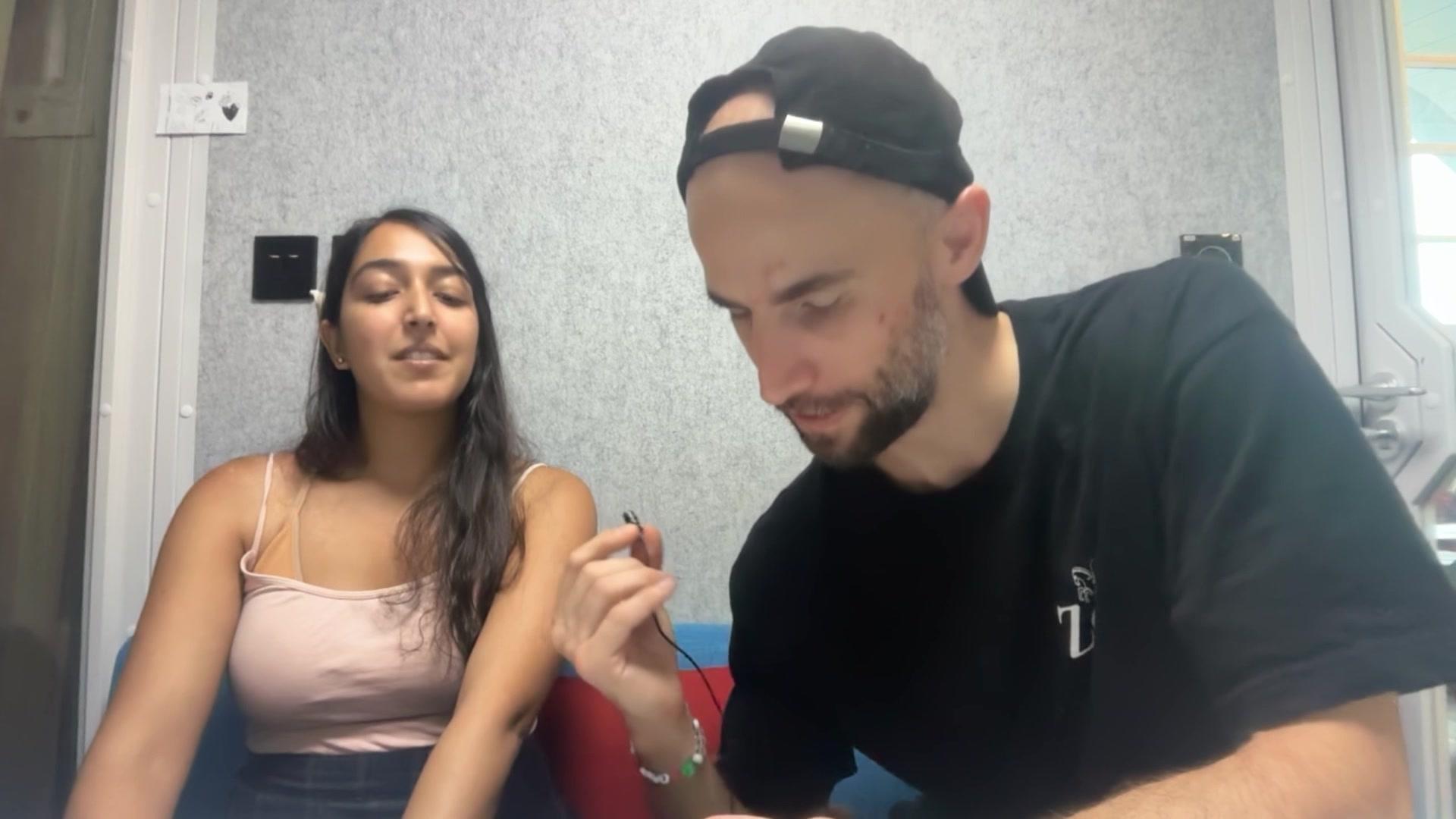
We ended on creativity itself. She thinks of it as a trainable muscle, and of good art as something that evokes emotion, even out of anxiety, pointing to Edvard Munch's The Scream. The thread she kept returning to: what separates human work from AI art is that you put a piece of your soul into it, and other people can relate to that. She wants to be a famous artist, on her own terms, partly because growing up she rarely saw a woman of color she could point to as a role model, and she wants to be that for someone else.
Key takeaways
- A setback can harden a calling instead of ending it. Breaking both hands sent her to learn her left hand, not to quit.
- Choosing what to amplify is an artistic decision. She moved from dark charcoal to color on purpose, to bring people joy.
- Hidden symbolism turns a painting into a story, and rewards the viewer who looks closely.
- You do not have to be the most technical person to add value to founders. Translation and narrative are their own craft.
- What makes art human is soul. That is the line she draws between her work and AI-generated images.
Links & mentions
- Velveteen on Instagram, her art
- Velveteen on X
- Miriam Reza on LinkedIn
- Chymira, branding and pitch for deep tech founders
- Miriam Reza Design, graphic design portfolio
- North Carolina State University, and RISD, where she studied and where she had hoped to go
- NFT the Movie, and NFT NYC: her work in the NFT and film world
- Island DAO, Forma Bristol, and Little Unusual: the communities and video agency along the way
- Scott Page (Pink Floyd), the LA Oscars art collection
- The Artist’s Way, and The War of Art: books that shaped how she takes her art seriously